

State-of-the-art Infrastructure
Powered by cloud infrastructure and data technologies selected for enterprise integration.






Flexible. Modular. Secure.
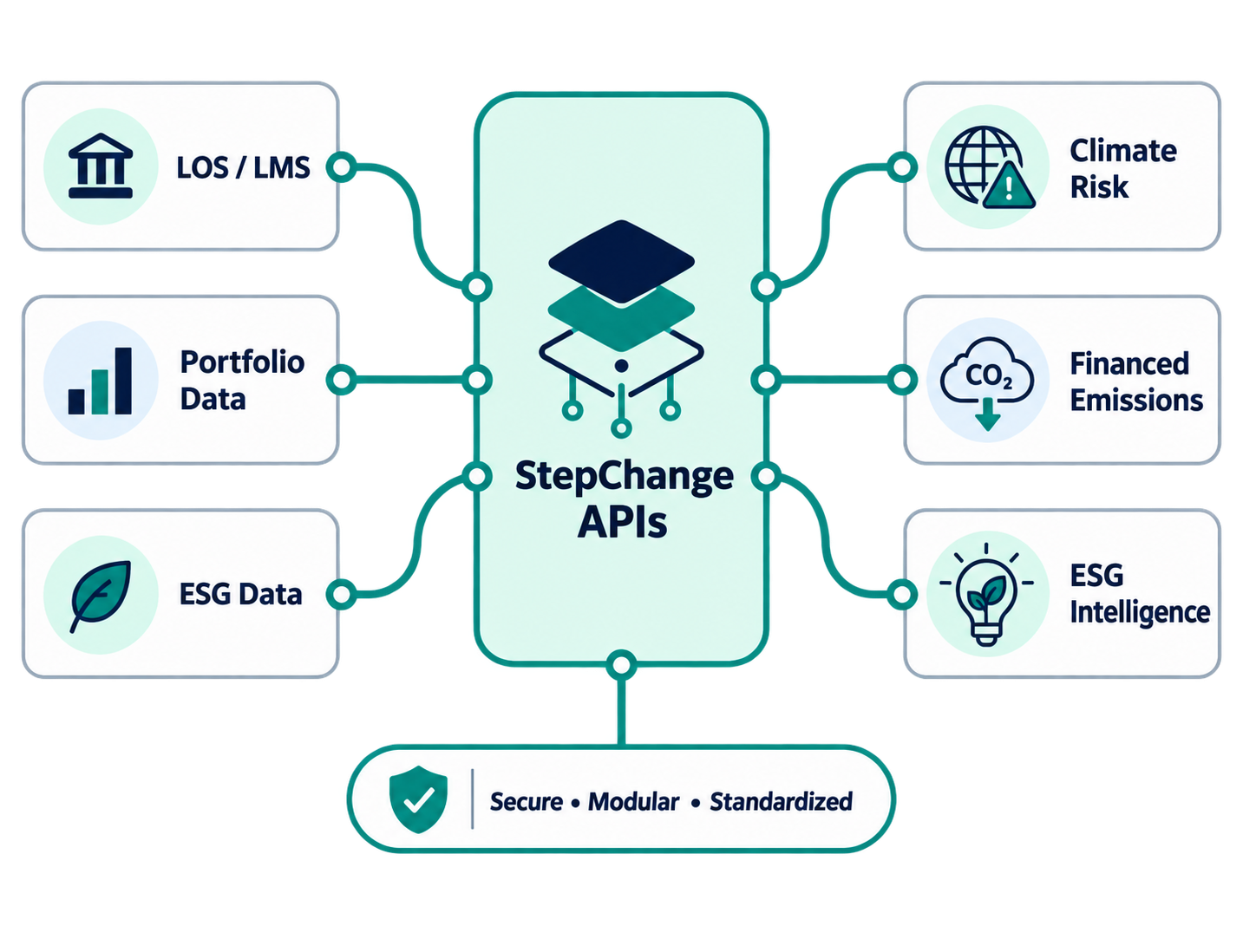
Purpose-built APIs for financial institutions to integrate climate risk, financed emissions and ESG assessments into underwriting, monitoring and reporting workflows.
StepChange is a preferred sustainability provider for financial institutions and enterprises.
.avif)
.avif)
.avif)
.avif)
.avif)
.avif)
.png)
.avif)
.avif)
.avif)
.avif)
.avif)
.avif)
.avif)
.avif)
.avif)
.avif)
.avif)
.avif)
.avif)
.avif)
.avif)
.avif)
.avif)
.avif)
.avif)
.avif)
.avif)
.avif)
.avif)
.avif)
.avif)
.avif)
.avif)
.avif)
.avif)
.avif)
.avif)
.avif)
.avif)
.avif)
.avif)
.avif)
.avif)
.avif)
.avif)
.avif)
.avif)
.avif)
.avif)
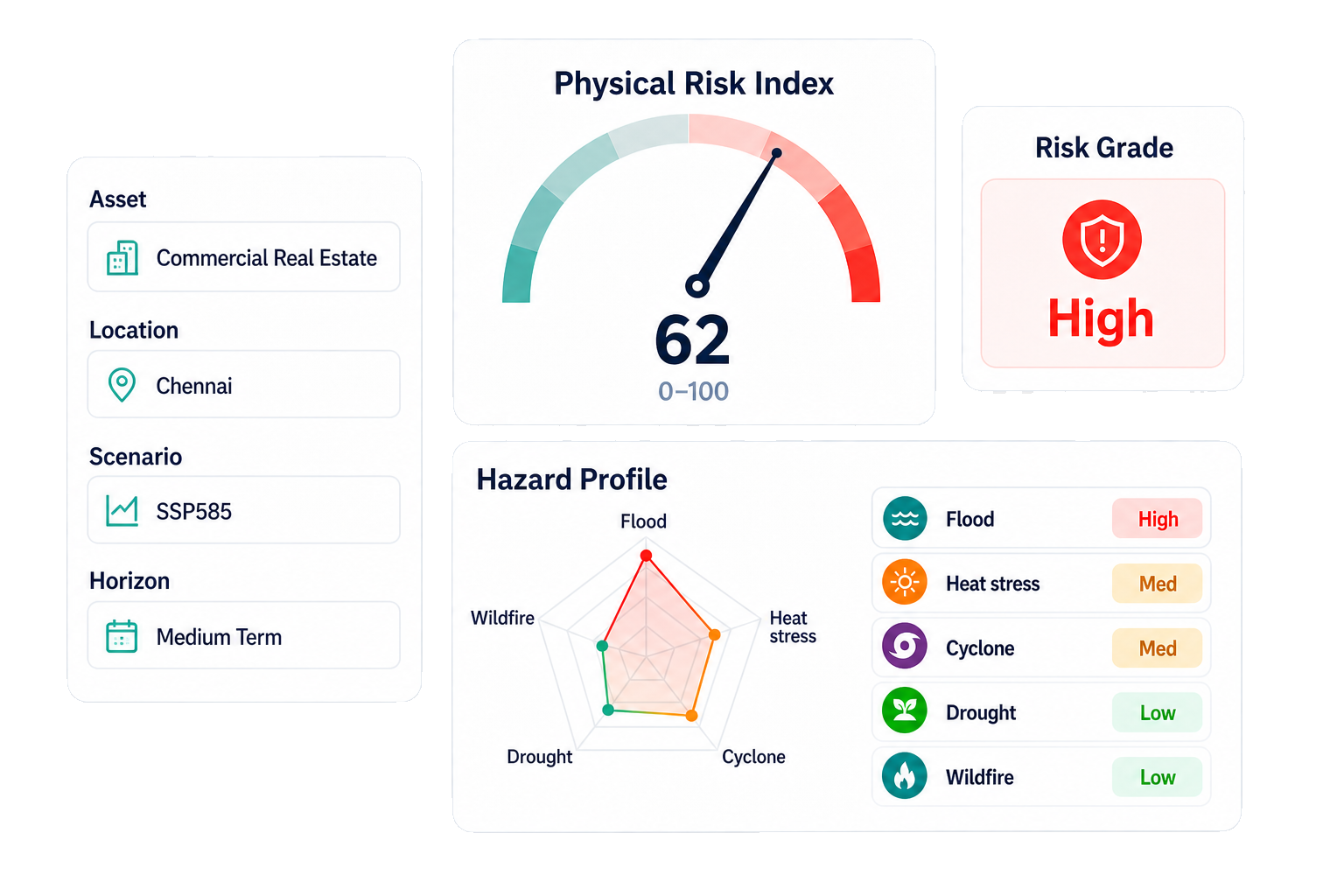
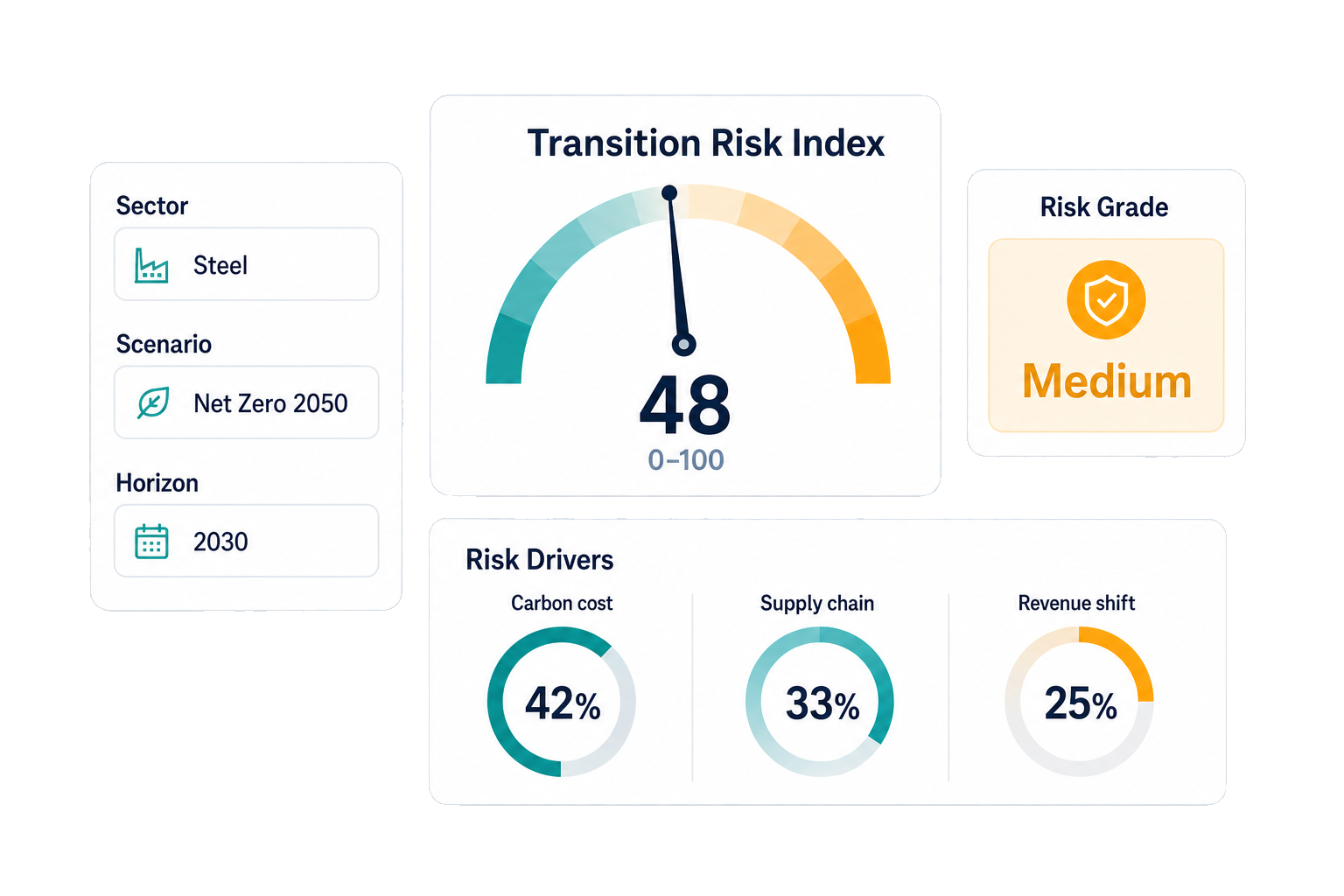
Assess loan/investment/asset-level physical and transition risks across different scenarios and time horizons. Incorporate results into existing financial worfklows via simplified screeners or more advanced decision matrices.
Evaluate seven hazards using postal codes or coordinates across asset damage, business disruption and labour productivity channels.
Receive scenario-specific Physical Risk Index, risk grade and value-at-risk metrics for each asset.
Use hazard-channel materiality and inbuilt resilience taxonomies to model effective risk mitigation measures.
Assess direct carbon cost, indirect supply-chain cost and revenue shifts as policy and markets tighten.
Receive NGFS-calibrated scenario-specific Transition Risk Indices, risk grades, a simplified value-at-risk metrics.
Use sector, exposure, maturity and other analytics to prioritize decarbonization and target-setting measures within your portfolio.
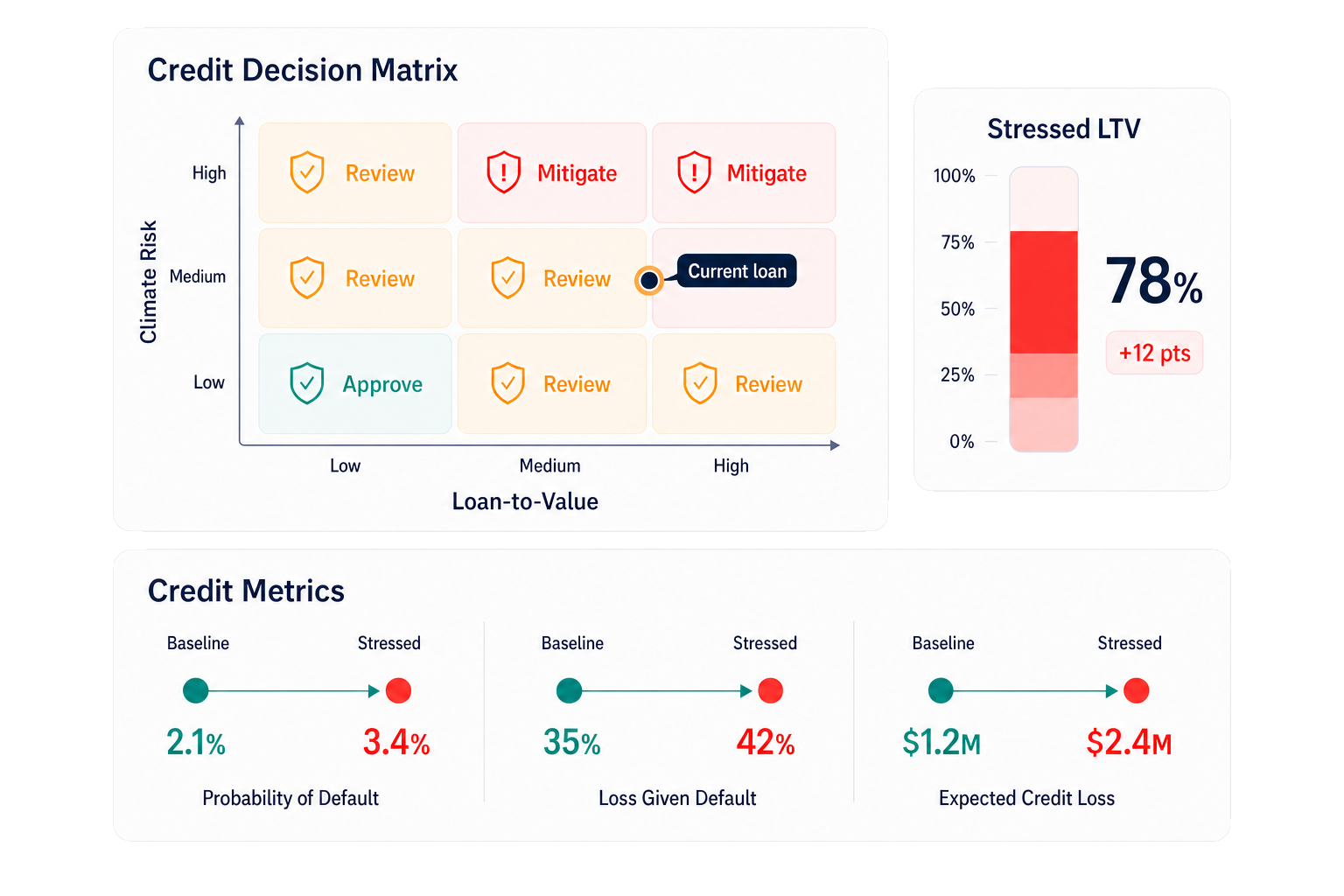
Leverage the underlying value-at-risk metrics to estimate stressed LTV ratios and screen vulnerbale loans.
Estimate stressed probability of default, loss given default and expected credit loss under the modeled physical-risk shock.
Incorporate climate risk assessments into core credit risk screening via decision-matrices.
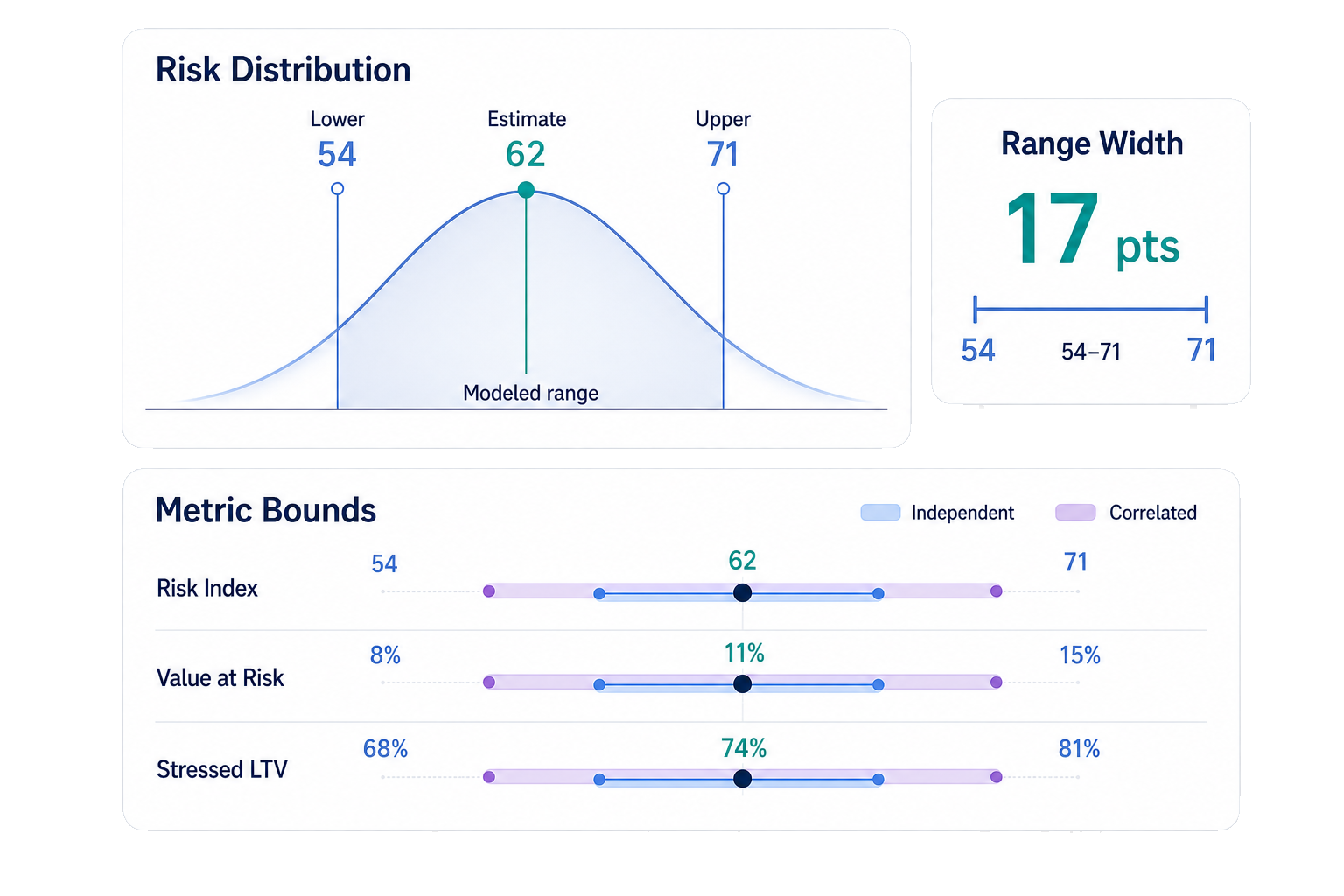
Generate deterministic lower and upper bounds around value-at-risk, the Physical Risk Index and relevant stressed credit metrics.
Uncertainty metrics include both conservative and best-case uncertainty estimates, showcasing the underlying uncertainty.
Use the uncertainty bounds to define screening allowances and classification thresholds.
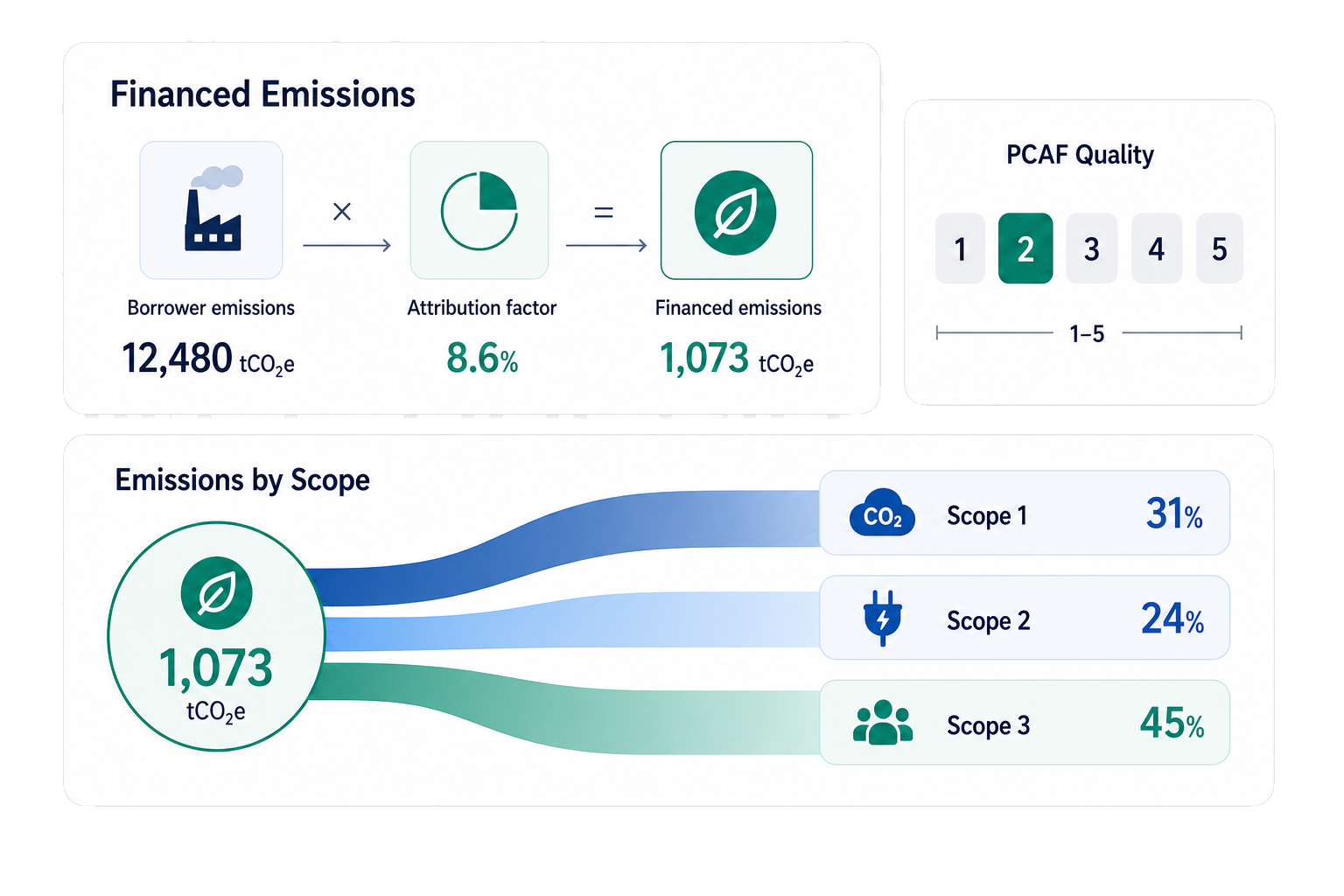
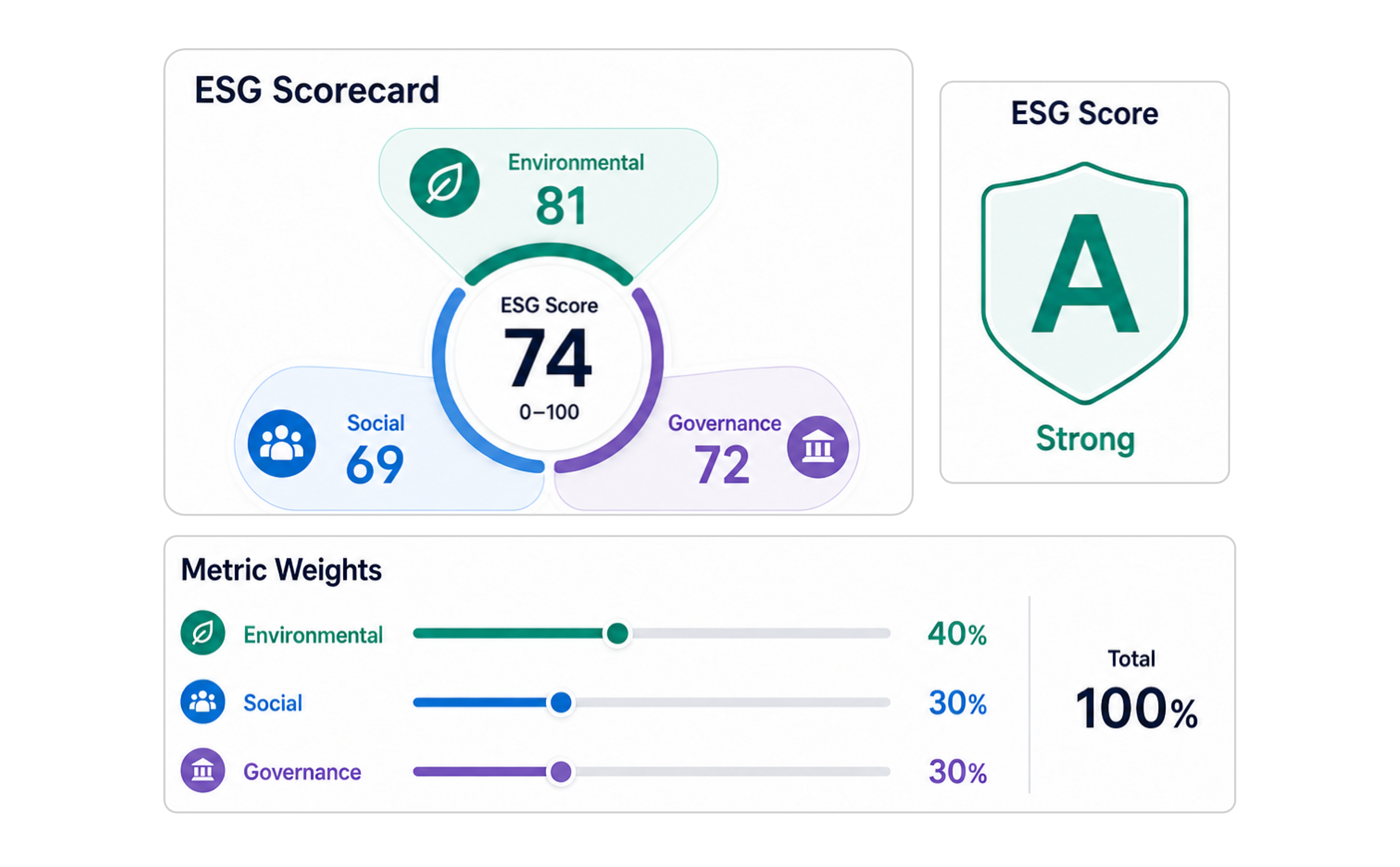
PCAF-aligned FE assessments and granular ESG scorecarding methods for loans and investment portfolios.
Apply PCAF-aligned attribution approaches across supported loan and investment asset classes.
Combine data sources across company financials and reported emissions where available.
Calculate financed emissions for each of the underlying scopes (1-3) for each counterpary.
Assimilate reported company metrics across a variety of sources and normalize to a common basis.
Translate disclosed metrics into both peer-relative and peer-invariant ESG scores using company, sector, industry and reporting-year context.
Estimate ESG ratings and scores using both default and user-defined metric weights and scoring configurations.
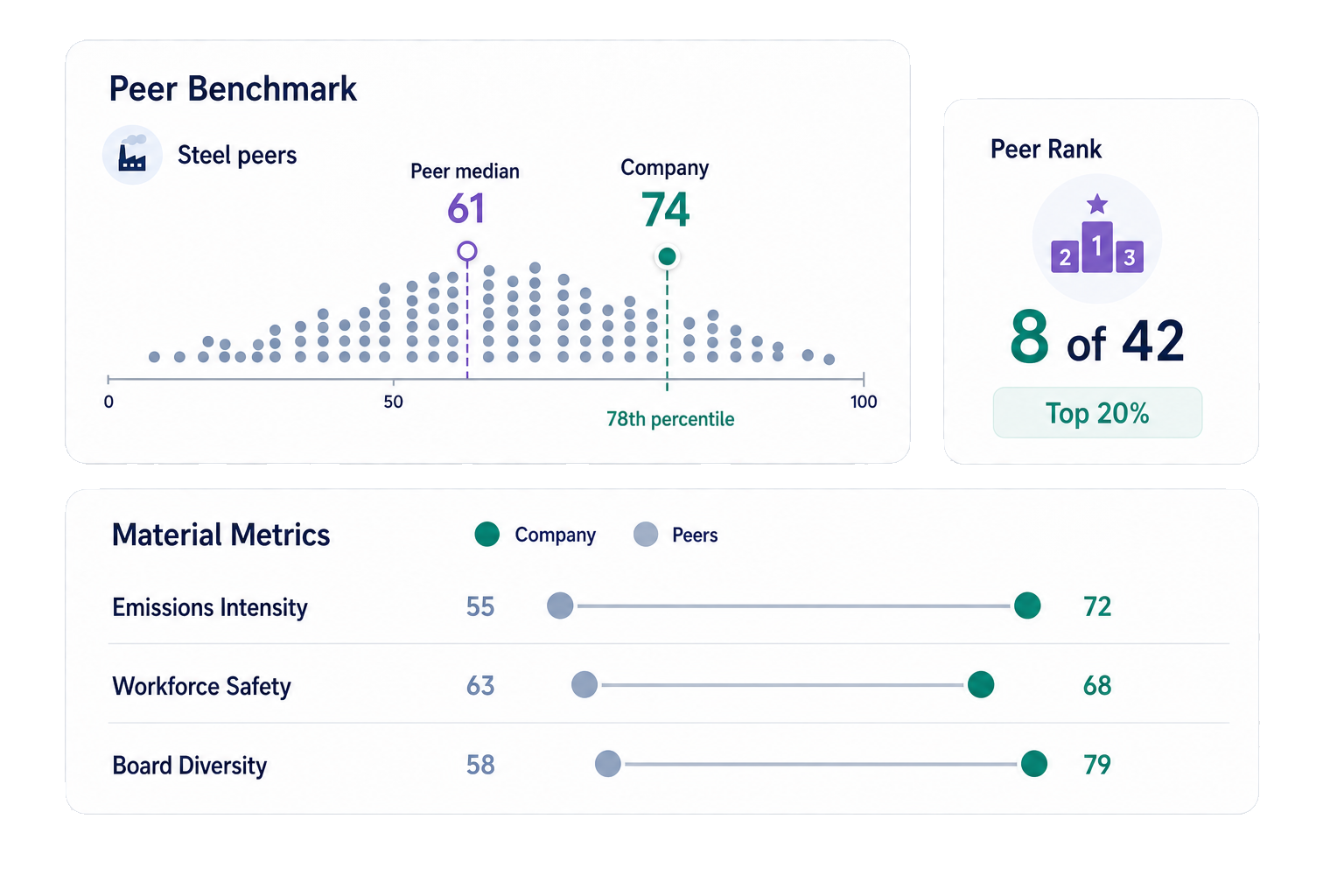
Use sector and industry classifications to benchmark and compare material ESG metrics across relevant counterparties.
Readjust individual environmental, social and governance scores based on the core underlying metric data.
Set borrower-level performance goals that are indexed to real data for the entire sector instead of relying on an conceptual targets.
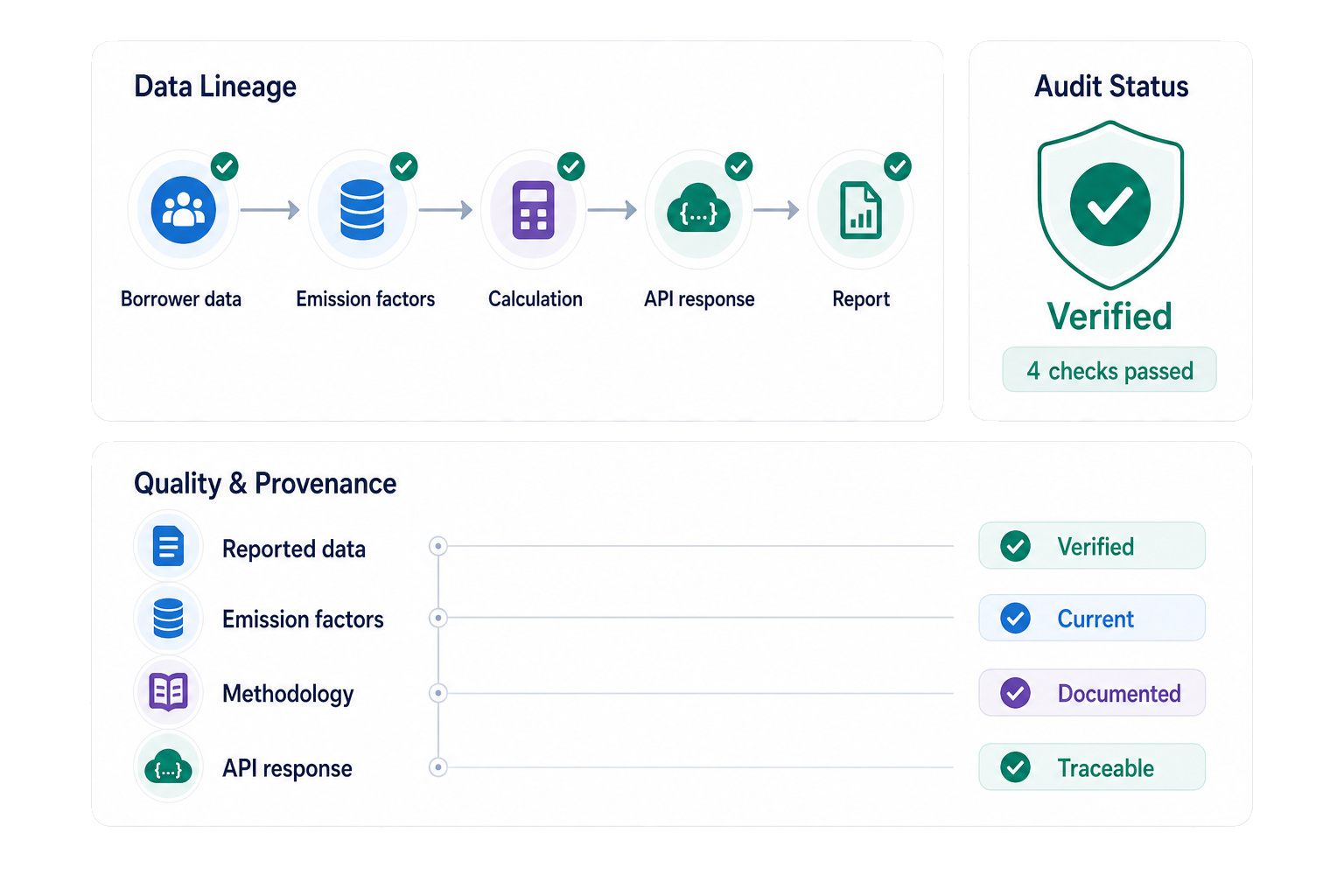
Transparently report using the best available data quality across financed-emissions and ESG results.
Maintain emission-factors / translation factors provenance to support internal review and audit workflows.
Each API contract includes a transparent documentation of the underlying methods, preventing "black-box" usage and enabling interpretability.
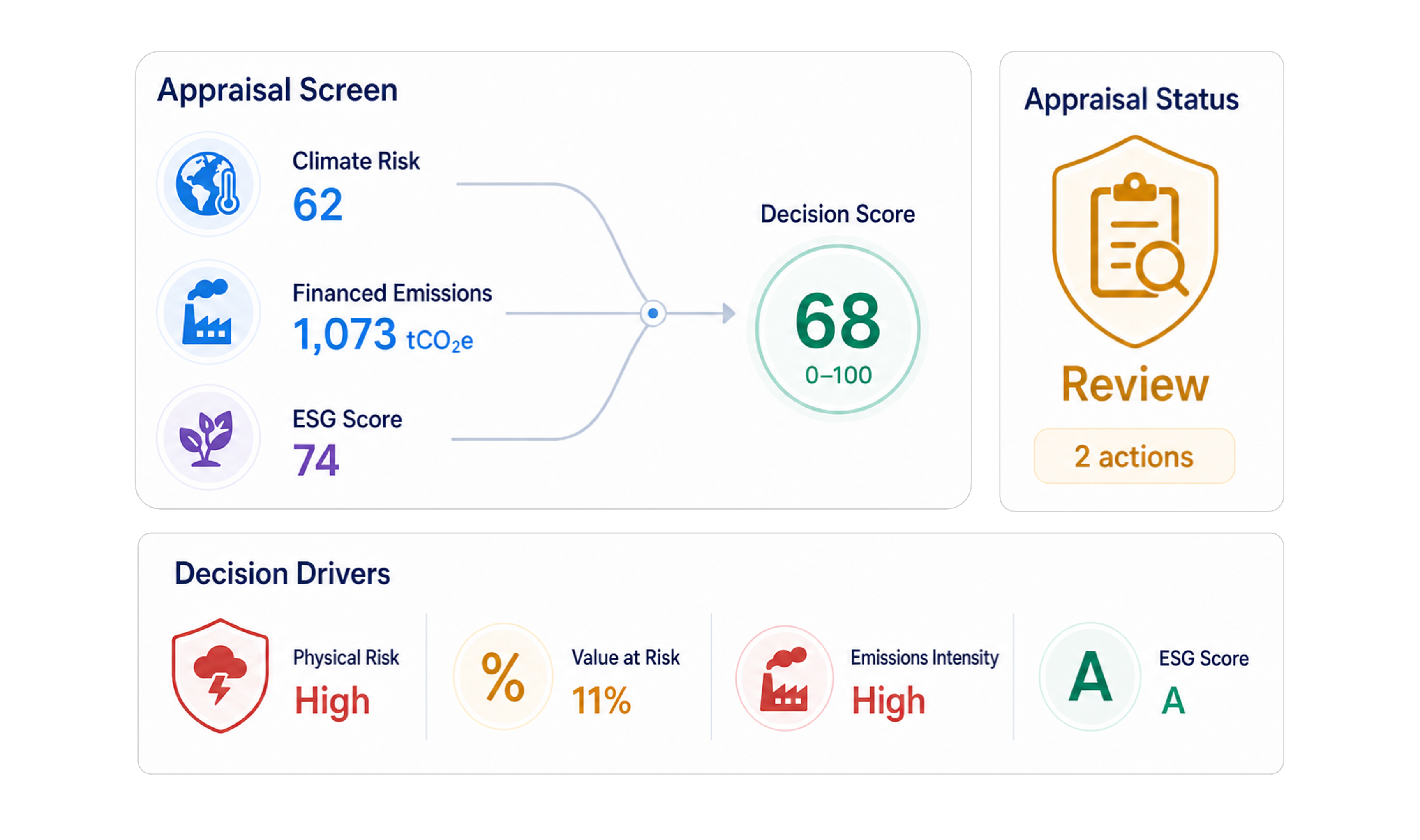
Use standardized API outputs across appraisal, sanction, renewal and reporting processes while setting decision thresholds based on bespoke governance frameworks.
Integrate climate risk APIs into loan or investment origination systems to assess risks during the diligence process.
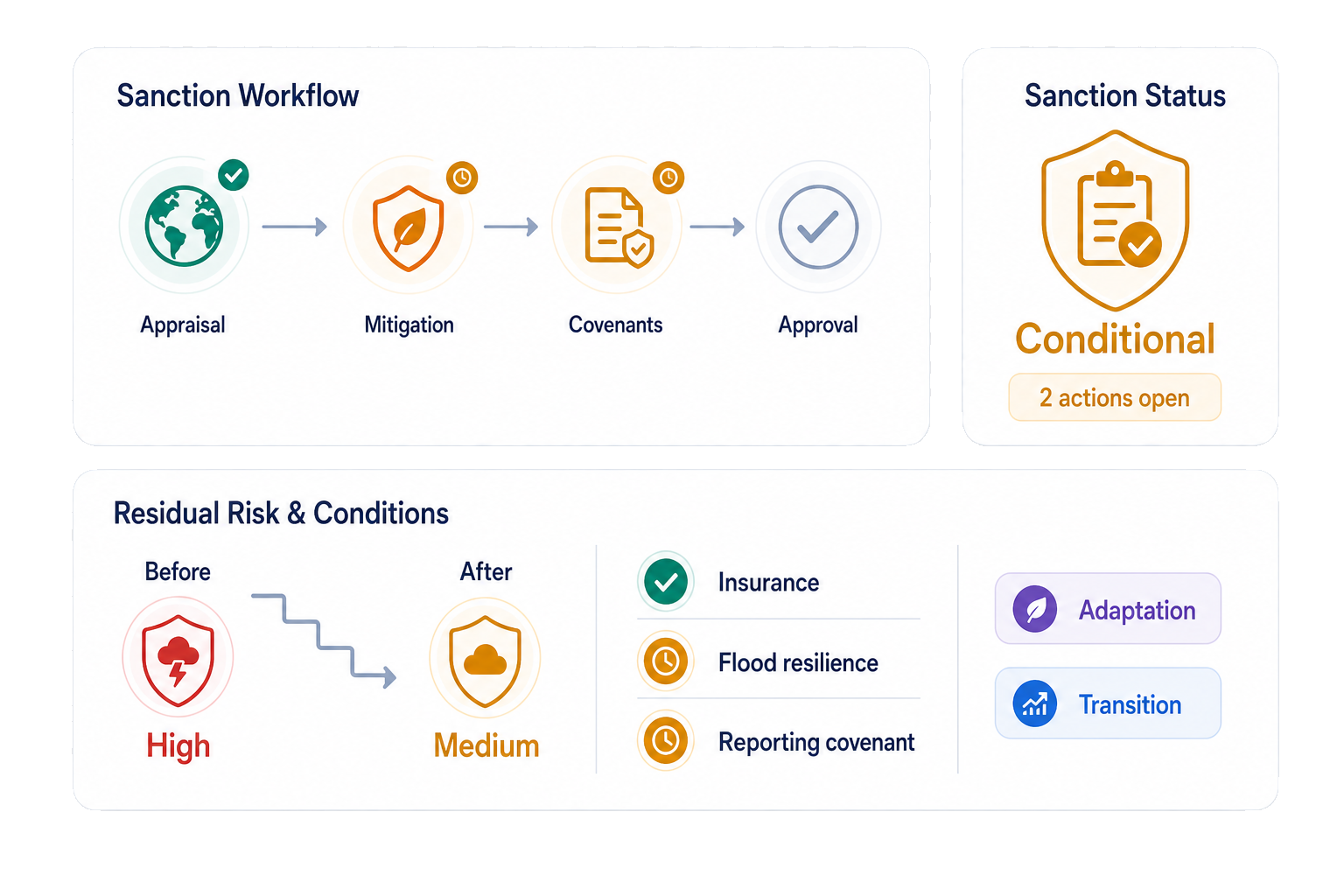
Leverage risk grades, value-at-risk metrics and hazard materialities to drive risk mitigation decisions (e.g. insurance requirements).
Calculate counterparty financed emissions and ESG metrics to generate a scorecard to pair with existing diligence information.
Generate loan-level climate risk, FE and ESG reports that can be used to drive constructive engagement with the counterparty.
Use standardized API outputs as inputs to drive institution-defined green, adaptation and transition-finance workflows.
Retain the risk analysis alongside approved insurance, resilience measures and other relevant covenants to inform future modeling.
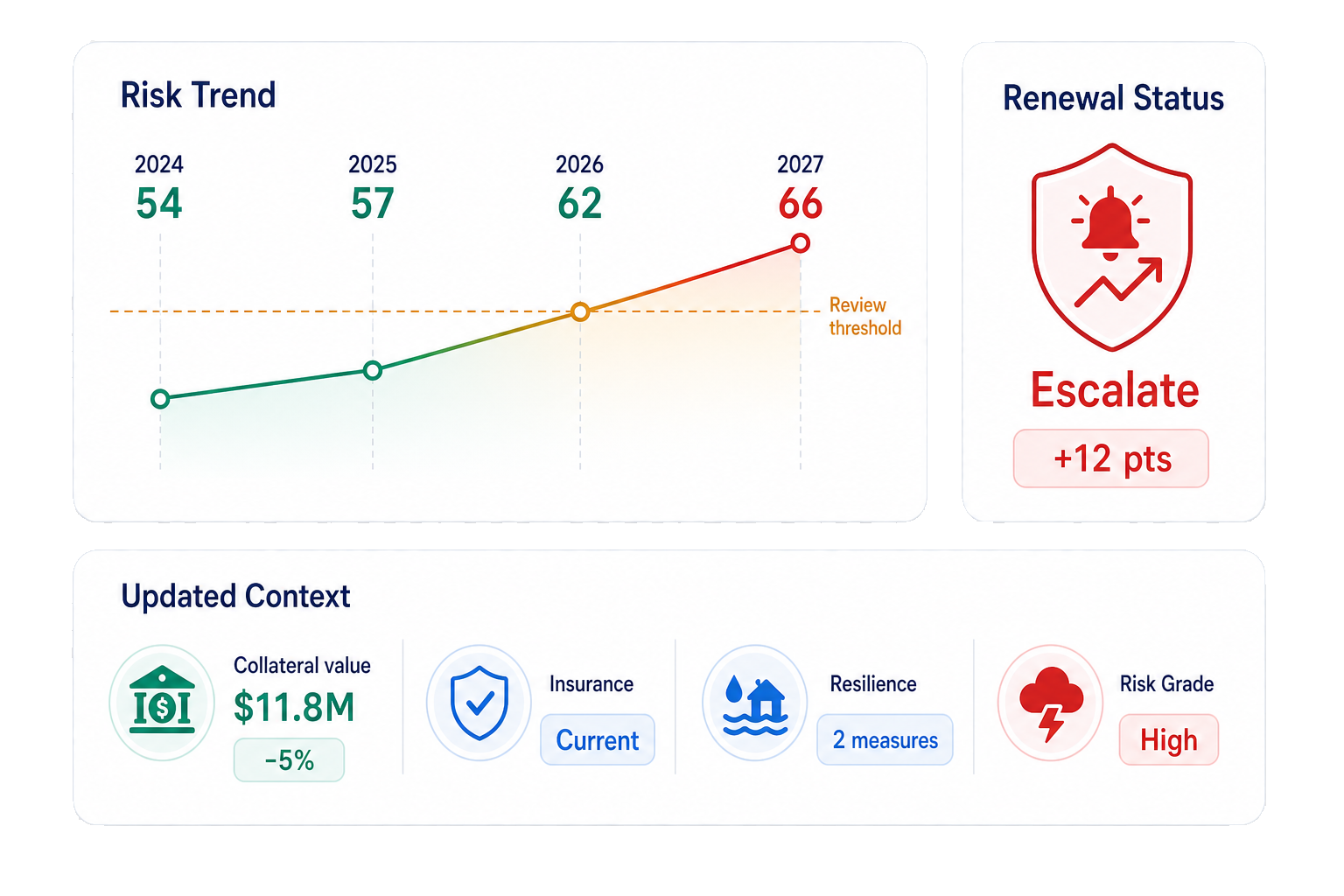
Update risk grades, indices and relevant financial-risk proxies at regular intervals across the lifecycle of the loan/investment.
Incorporate updated asset value, insurance or adaptation information on the underlyihng collateral as new data is reported.
Flag material movement between risk bands (as a result of an update in counterparty data) for additional review.
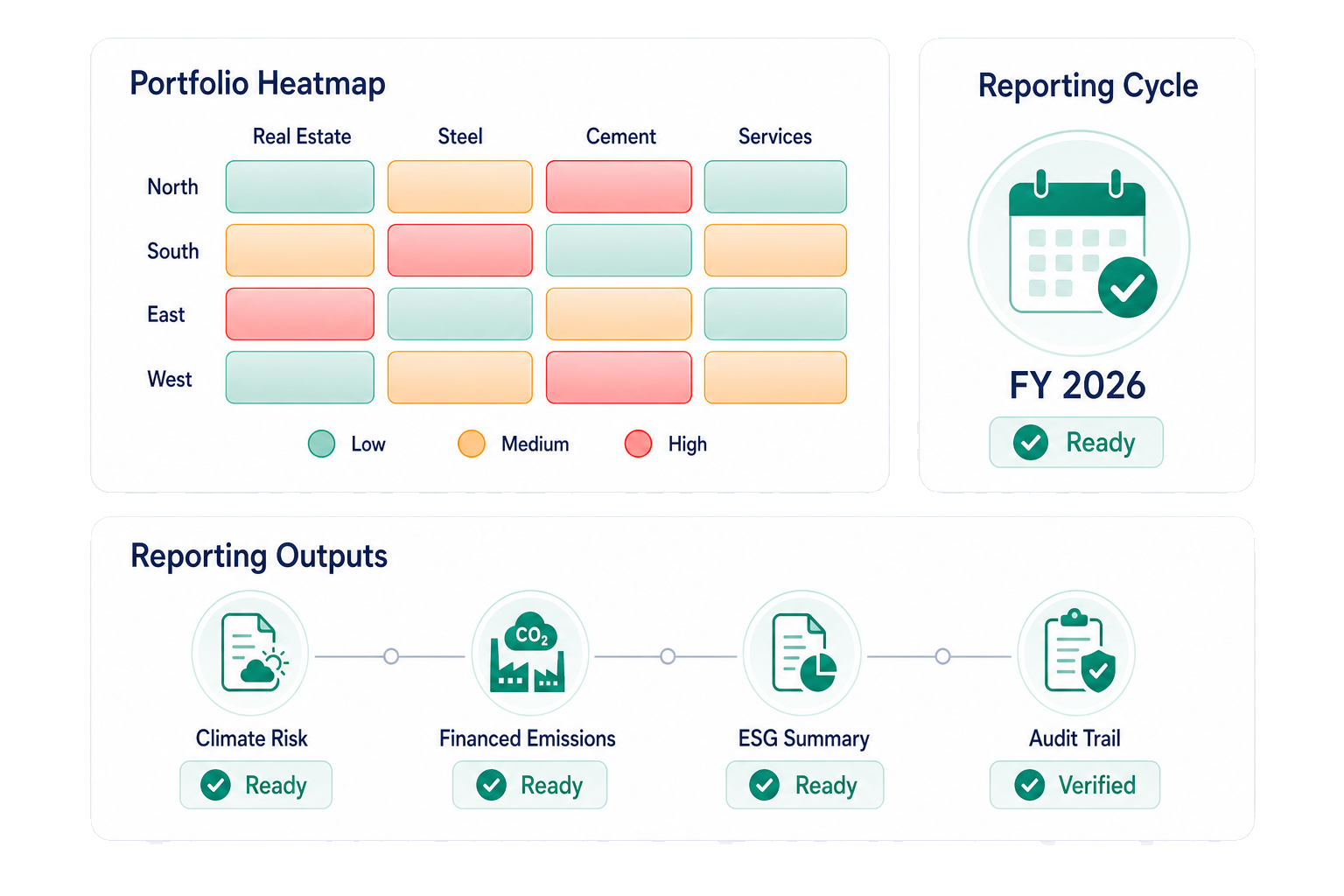
Roll counterparty-level results into sector, asset-class and geographic heatmaps for portfolio reporting.
Leverage the most updated emission factors, ESG data and climate risk models for each reporting cycle.
Pass standardized API outputs directly into reporting and disclosure workflows.
A modular set of API offerings across climate risk, portfolio emissions, ESG intelligence. Designed specifically for workflow integration.

Connect standardized services through existing enterprise gateways and agreed data-sharing controls.

Validate, map and process loan, asset, company and location inputs at the required assessment grain.

Evaluate risk across hazards, scenarios, time horizons and financial transmission channels.

Use available company, emissions, financial and benchmark data to strengthen assessment coverage.

Bring selected outputs into underwriting, monitoring, portfolio analysis and reporting processes.

Aggregate loan-level outputs into sector, geography, asset-class and portfolio views.

Use consistent output fields, data-quality indicators and methodological controls to support review.

Support modular deployments and scalable processing within the agreed enterprise architecture.

Pair API integration with climate-risk, financed-emissions, ESG and credit-workflow expertise.
Powered by cloud infrastructure and data technologies selected for enterprise integration.
Aligned with PCAF, GRI, TCFD, ISSB, IFRS and related sustainability and climate-risk frameworks.




Enterprise-grade security with the compliance certifications and privacy protections presented on the StepChange Platform page.



Connect API outputs with lending, data, reporting and analytics systems through an institution's chosen integration architecture.




Tell us which portfolio, asset class and workflow you want to support. We will help identify the right API scope and integration pathway.



